

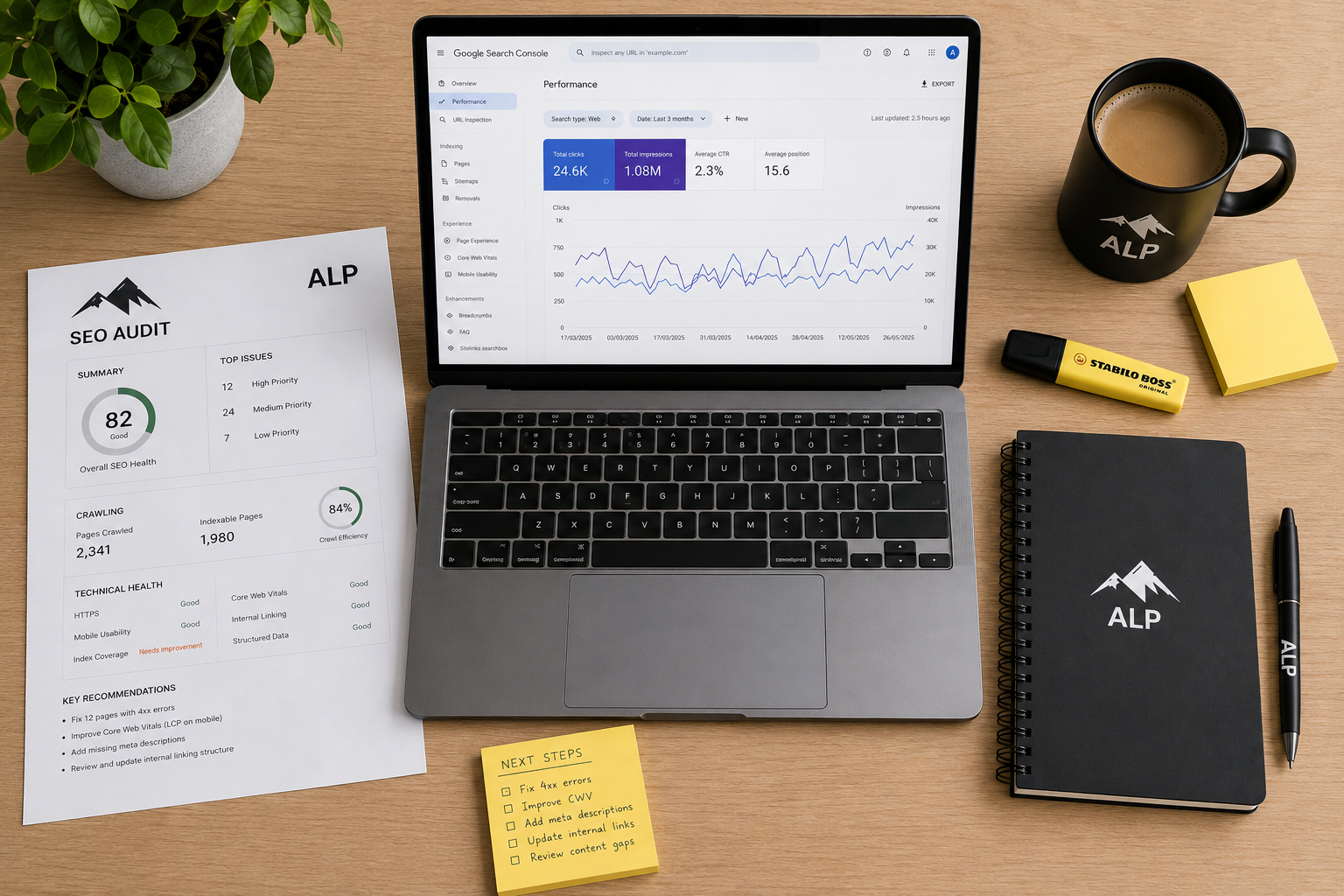
Technical SEO is the work of making sure search engines can find, crawl, understand and trust your website. It is the foundation the rest of your SEO sits on. You can write brilliant content, but if Google cannot read your site properly, it will not rank.
This guide fits under our main explainer on what SEO is, and zooms in on the technical pillar. You do not need to be a developer to follow it.
Why technical SEO matters
Search engines send out automated crawlers to read the web. If those crawlers hit broken links, slow pages or a confusing structure, they give up or misunderstand your site. Technical SEO clears those obstacles so your content gets the fair hearing it deserves.
Think of it as the plumbing. Nobody admires it when it works, but everything breaks when it does not.
The technical basics that matter most
These are the areas that move the needle for most websites:
- Crawlability. Search engines need to reach your pages through a clean internal link structure, a working XML sitemap and a sensible robots.txt file. If a page has no links pointing to it, it may never be found.
- Indexing. Being crawled is not the same as being indexed (stored and eligible to rank). Accidental “noindex” tags and blocked pages are a common reason content goes missing from Google.
- Site speed and Core Web Vitals. Slow pages frustrate users and hurt rankings (more on the specific metrics below).
- Mobile friendliness. Google ranks based on the mobile version of your site. If it is awkward on a phone, that is the version being judged.
- Secure pages (HTTPS). A valid security certificate is a baseline expectation now, not a nice-to-have.
- Clean site structure and URLs. A logical hierarchy and tidy, readable URLs help both users and search engines understand how your content fits together.
- Structured data (schema). Code that spells out what your content is, a product, a recipe, a local business, an FAQ, so engines can display it richly and cite it confidently. It also supports your AI search visibility.
- No duplicate content. Multiple URLs showing the same content split your ranking signals. Canonical tags and redirects keep things tidy.
Core Web Vitals, in plain English
Core Web Vitals are three measurements Google uses to judge real-world experience. Aim for the “good” thresholds:
- Largest Contentful Paint (LCP) measures loading. How long until the main content appears? Aim for under 2.5 seconds.
- Interaction to Next Paint (INP) measures responsiveness. How quickly does the page react when someone taps or clicks? Aim for under 200 milliseconds.
- Cumulative Layout Shift (CLS) measures visual stability. Does content jump around as the page loads? Aim for under 0.1.
The usual culprits behind poor scores are oversized images, heavy scripts and slow hosting. Compressing images (and using modern formats like WebP), removing unused code and choosing decent hosting fixes most problems.
Common technical problems, and how to spot them
Most issues are invisible to a casual visitor but easy to surface:
- Pages missing from Google: check the Pages report in Google Search Console.
- Slow loading: run a page through Google’s PageSpeed Insights for a free Core Web Vitals reading.
- Broken links and error pages: a free site crawler (such as Screaming Frog’s free tier) will list them.
- Mobile issues: view your own site on a phone, honestly, and tap through the key journeys.
- Duplicate or thin pages: look for several URLs targeting the same thing.
Our step-by-step SEO audit guide walks through these checks in order.
Quick questions
Do I need a developer? For the basics, often not. Compressing images, fixing broken links and tidying titles are manageable for most site owners. Deeper fixes (server response times, structured data, JavaScript rendering) usually benefit from a developer or an agency.
How often should I check? A thorough review once or twice a year is plenty for most small sites, plus a quick look whenever you make big changes like a redesign or a site move.
Is technical SEO a one-off? Largely yes. You fix the foundations, then keep an eye on them. The goal is simply to remove the barriers that stop your content and authority from doing their job.
Where to go next
Once the foundations are solid, attention shifts to content and authority. If you would like a specialist to find and fix the technical issues holding your site back, see our SEO services or request a free audit.